


The science of cannabinoids
Thousands of years of evolution and a hundred years of prohibition got us here.
Counter to popular belief, leading scientific research from around the world has shown that cannabinoids are integral to performance by accessing and regulating the Endocannabinoid System (ECS). It is the foundation of our approach.
The
Science of
Cannabinoids
on Human
Performance
The ECS has been found to be a primary regulator of mood, pain and performance during exercise.
For some time, endorphins were believed to cause the euphoric effect of rigorous exercise, commonly referred to as the ‘runner’s high,’ ‘exercise high,’ or ‘feeling in the zone.' Although this theory was made popular, it was never actually proven. The issue was that Endorphins are unable to pass the blood-brain barrier, making it impossible for them to lower inflammation which is a known and visible result of the Exercise High.
Recently, scientists have explored the Endocannabinoid System (ECS) as a potential regulator of exercise. The results were stunning! Not only was the ECS the primary cause for the Exercise High, able to both cause the euphoric effect similar to Endorphins but also proven to help lower inflammation¹. Further studies corroborated these findings, making Cannabinoids the official molecule of the Exercise High.
Unlike opioids, exogenous Cannabinoids are abundant and much safer for consumption. Allowing you to self regulate your ECS to optimize your performance.
Cannabinoid receptors, CB1 and CB2, regulate mood, pain, inflammation, and recovery. They interact with both naturally produced endocannabinoids and hemp-derived cannabinoids to maintain balance in the body.
CB1 receptors are primarily in the brain and nervous system. When activated by anandamide, they influence dopamine release, pain perception, and stress response, leading to effects like the runner’s high and reduced discomfort during exercise.
CB2 receptors are are present in immune cells and muscle tissues. They help reduce inflammation, support recovery, and regulate immune function, minimizing soreness and swelling after intense workouts, which aids endurance and performance.

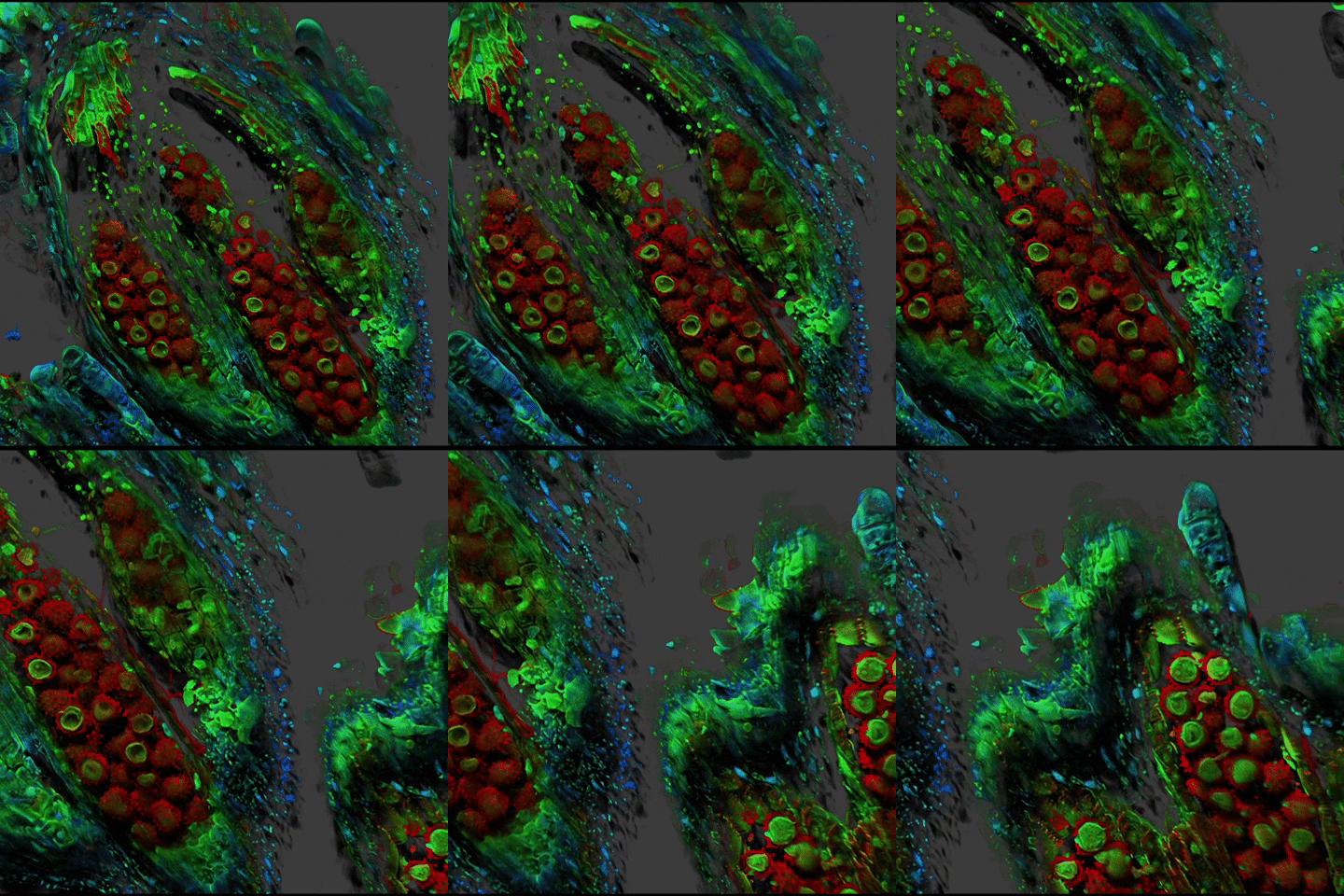
Fig. 1 - CB1 receptors influence dopamine release, pain perception, and stress response during exercise.
The Endo-canna-binoid System (ECS)
It's a mouth full, but the ECS is a key regulator of our mind and body. Much like your nervous system, it spans from your head all the way to your toes. The ECS is an integral part of homeostasis and a connection point between mind and muscle during exercise.

Brain: Runner’s High & Mood Regulation
Anandamide binds to CB1 receptors in the brain, elevating dopamine and serotonin levels. This creates a feeling of euphoria, reduces anxiety, and enhances focus.
Muscles: Inflammation Reduction & Recovery
CB2 receptor activation in muscle tissue reduces inflammation and oxidative stress, promoting faster recovery and reducing soreness after intense exercise.
Cardiovascular System: Blood Flow & Endurance
Anandamide influences vasodilation, improving oxygen delivery to muscles and enhancing endurance performance during prolonged exercise.
Immune System: Anti-Inflammatory Effects
CB2 receptors in immune cells help regulate inflammation, preventing excessive immune response that could lead to joint stiffness.
Digestive System: Gut Health & Energy Balance
Endocannabinoids modulate digestion and nutrient absorption, helping maintain energy balance during endurance activities while reducing gut distress.
Nervous System: Pain Modulation & Stress
2-AG activates CB1 receptors along the spinal cord and peripheral nerves. This blocks pain signals, helping runners push through while maintaining endurance.
What are cannabinoids?
There are two main types of cannabinoids: endogenous cannabinoids (produced naturally within our bodies) and exogenous cannabinoids (introduced from outside sources, such as cannabis, which contains phytocannabinoids)
Cannabinoids are natural compounds that interact with the body’s ECS, which helps regulate mood, pain, inflammation, sleep, and overall balance. They can come from two sources: our bodies or plants. The most well-known plant-derived cannabinoids (phytocannabinoids) include THC, CBD, and CBN, found in cannabis and hemp.
The ECS works by producing its own cannabinoids (endocannabinoids) that bind to receptors throughout the body, helping maintain homeostasis. When phytocannabinoids are introduced, they interact with these same receptors, enhancing or mimicking the body’s natural processes. This is why cannabinoids can help with pain relief, relaxation, and recovery.
Endocannabinoids and phytocannabinoids share similar functions but come from different sources. Endocannabinoids are produced internally, while phytocannabinoids come from plants. Both play a role in regulating key functions, supporting balance, and improving overall well-being.
100 years of prohibition. Thousands of years of understanding.
For thousands of years, people have used cannabinoids for pain relief, relaxation, and overall wellness. Ancient civilizations, from China to Egypt, documented cannabis as a natural remedy for sleep, inflammation, and stress. It was widely accepted in medicine until the early 20th century when political and racial motives, not science, led to prohibition. Only recently has research reaffirmed what humans have long known—cannabinoids support health, balance, and recovery, making their return to mainstream wellness both necessary and long overdue.

Fig. 2 - The balance between exogenous and endogenous cannabinoids.
Each
cannabinoid
serves
a purpose.
While phytocannabinoids were first discovered in the 1940s, with THC isolated in 1964, the first endocannabinoid, anandamide (AEA), was discovered in 1992. These discoveries helped reveal the endocannabinoid system (ECS) as a crucial part of human physiology. Over 120 cannabinoids have since been identified. Modern technology like chromatography and mass spectrometry accelerates their discovery. Today, advanced research methods usher in a new era, revealing how cannabinoids interact precisely with the body’s endocannabinoid system to enhance wellness.

Phytocannabinoids
THC Tetrahydrocannabinol is believed to enhance focus, reduce pain, boost endurance, aid recovery, and induce euphoria. THC enhances the entourage effect, amplifying the effect of other cannabinoids. Found in our High Performance Energy Gummies and High Performance Sleep Gummies.
CBG Cannabigerol is non-psychoactive, believed to reduce inflammation, enhance focus, support endurance, relieve pain, and accelerate recovery. CBG was found to improve memory and reduce anxiety. Found in our High Performance Energy Gummies and Enhanced Energy Gummies.
CBD Cannabidiol is non-psychoactive, reduces inflammation, relieves pain, supports endurance, aids recovery, and promotes relaxation. Found in every OFFFIELD formula.
CBN Cannabinol promotes deep sleep, reduces restlessness, and enhances recovery. It is a well documented all natural sleep aide molecule. Found in our High Performance Sleep Gummies.
CBC Cannabichromene may reduce inflammation, relieve pain, improve mood, support brain health, and promote overall wellness.

Endocannabinoids
AEA Anandamide regulates mood, pain, appetite, and stress (often called the “bliss molecule”). Responsible for the natural effects of the Exercise High.
2-AG 2-Arachidonoylglycerol influences immune function, inflammation, and neuroprotection.
2-O-ARA-GLY Noladin Ether is less studied but believed to interact with CB1 receptors.
OAE Virodhamine acts as a CB1 receptor antagonist and CB2 agonist, modulating cardiovascular and metabolic processes.
PEA Palmitoylethanolamide modulates pain and inflammation but primarily affects PPAR receptors rather than CB1/CB2.
OEA Oleoylethanolamide regulates appetite and metabolism, also interacting with PPAR-alpha.
The Entourage Effect
When cannabinoids work together, they produce a stronger, more balanced result than any single compound on its own. This is called the entourage effect, first identified by researchers Raphael Mechoulam and Shimon Ben-Shabat in 1998². THC, CBD, CBG, and CBN each activate different receptors and pathways, but when combined, they modulate each other in ways that amplify benefits and reduce unwanted side effects.
High dose THC taken alone is not the answer. Without CBD and CBG to balance it, high doses of THC can elevate heart rate, increase anxiety, and impair coordination, working directly against athletic performance. Low doses, in combination, are where the science points.
CBD is known to temper the psychoactive intensity of THC while preserving its performance and recovery benefits. CBG adds anti-inflammatory support and focus enhancement that neither THC nor CBD provides alone. This synergy is why OFFFIELD formulas use multiple cannabinoids rather than isolates. Single-molecule products cannot replicate the full-spectrum effect that nature intended and science has confirmed.
Every OFFFIELD formula was built around this principle. The ratios are not random.
Will it
work
on you?
We’re all unique, so understanding how your body works is the key to achieving the best results.
Every person's Endocannabinoid System is as unique as their fingerprint. Genetics, lifestyle, stress levels, and exercise history all influence your baseline ECS tone, meaning the same dose can feel dramatically different from one person to the next. Research into Clinical Endocannabinoid Deficiency (CECD) suggests that people with chronically low endocannabinoid levels are more likely to experience heightened pain sensitivity, poor sleep, and mood dysregulation, and may respond most noticeably to cannabinoid supplementation.⁶
Everyone’s body responds differently to cannabinoids—some need more, others less. Just like pacing a run, finding the right amount is about listening to your body. Studies show low-dose cannabinoids are well-tolerated, with minimal side effects. Research supports their safety for sleep, stress, and recovery, making them a natural alternative to harsher medications. Start low, adjust gradually, and discover what helps you feel your best.



How to
use it
Start low. The most common mistake first-time cannabinoid users make is taking too much too soon. Your ECS needs time to calibrate. Begin with half a serving for the first few days and pay attention to how your body responds before adjusting.
Timing matters. OFFFIELD uses a fast-acting nano-emulsion technology that significantly reduces onset time compared to standard edibles. On an empty stomach, effects can be felt in as little as 5 to 10 minutes. With a light meal, expect 10 to 20 minutes. The heavier the carbohydrate load of your meal, the longer the delay. A heavy pasta dinner, for example, can push onset to 90 minutes. Plan accordingly.
For energy and performance, take your gummies 15 to 30 minutes before activity when training fasted or lightly fueled. For sleep, take your Sleep Gummies 30 to 45 minutes before bed on a light stomach for best results.
Consistency builds results. The ECS responds to sustained input over time, not single large doses. Most users report the most noticeable results after 7 to 14 days of consistent use.
Individual response varies. Body weight, metabolism, diet, and baseline ECS tone all influence how you respond. If you feel nothing after a week at the starting dose, increase gradually. If you feel more than expected, reduce the amount and give your system more time to adjust.


High Performers
Health-conscious biohackers use cannabinoids to optimize recovery, reduce inflammation, and enhance focus, integrating them into their routines like supplements or adaptogens. By fine-tuning dosage and timing, they leverage cannabinoids to support sleep, stress resilience, and overall performance without reliance on synthetic alternatives.


Pro Athletes
Athletes use cannabinoids to support muscle recovery, reduce inflammation, and manage stress, helping them train harder and recover faster. By incorporating low-dose THC, CBD, or CBN, they optimize sleep, endurance, and focus, naturally enhancing performance without the side effects or long term damage of traditional painkillers or sleep aids.


Late Bloomers
People just starting their health journey use cannabinoids to ease stress, improve sleep, and support recovery, making it easier to stay consistent with movement and wellness. By reducing discomfort and enhancing relaxation, they begin to enjoy exercise for the first time, transforming it from a chore into something they genuinely look forward to.

Precision testing changes everything.
Deregulation of cannabinoids does not mean less testing. It means more. OFFFIELD products are third-party tested for potency, purity, and the absence of pesticides, heavy metals, and residual solvents. Every batch has a certificate of analysis you can verify.
Precision dosing is what separates a functional product from a recreational one. Knowing that each gummy delivers exactly what you expect allows you to dial in timing, adjust for your body, and build a consistent routine. Guesswork has no place in performance.
Not all edibles are the same.
Most edibles on the market are candy with a high dose of THC. That is the beginning and end of the formula. The assumption is that more THC equals a better experience. The science says otherwise.
The runner's high is not a THC high. It is a complex biochemical event driven by your endocannabinoid system working in concert with multiple physiological processes at once. Anandamide floods the brain. Dopamine and serotonin rise. Inflammation drops. Pain signals quiet. Oxygen delivery improves. It is a full-system response, not a single molecule doing one thing.
Replicating that effect intentionally requires more than THC. It requires understanding which ingredients support each part of that response and combining them at precise ratios.
OFFFIELD Energy Gummies pair low-dose THC, CBD, and CBG with natural caffeine. Natural caffeine promotes alertness and endurance. CBD reduces the anxiety that high-dose THC alone can trigger and broadens the anti-inflammatory effect. CBG adds focus and additional pain modulation. Together they support the mental clarity, reduced discomfort, and elevated mood that define peak performance.
OFFFIELD Sleep Gummies pair low-dose THC, CBD, and CBN with magnesium, chamomile, and L-theanine. CBN at 20mg is clinically supported for reducing nighttime awakenings. Magnesium is essential for muscle recovery and sleep quality. Chamomile and L-theanine reduce cortisol and promote the nervous system downregulation your body needs after training. No single ingredient here does the job alone.
Every ingredient in every OFFFIELD formula is natural, non-synthetic, and chosen because it plays a specific role in a specific physiological process. The ratios are not random. The combinations are not accidental. This is what separates a performance product from a recreational one.
BEST SELLER

Subscribe & Save 25%
THC FREE

Subscribe & Save 25%
THC FREE

BEST SELLER

Subscribe & Save 25%
THC FREE

Subscribe & Save 25%
THC FREE

Subscribe & Save 25%
Key studies at the intersection of cannabis research and human performance.
Research has been held back by federal restrictions, but the evidence is clear—cannabinoids offer real benefits. We advocate for deregulation to unlock the full potential of scientific discovery and move beyond outdated stigmas that have shaped perceptions for far too long.
Exercise-induced euphoria and anxiolysis do not depend on endogenous opioids in humans.
Michael Siebers, Sarah V. Biedermann, Laura Bindila, Beat Lutz, Johannes Fuss
April 2021
The runner's high is driven by cannabinoids, not endorphins. Endorphins cannot cross the blood-brain barrier. The ECS can.
Read paper
The New Runner's High? Examining Relationships Between Cannabis Use and Exercise Behavior in States With Legalized Cannabis
YorkWilliams SL, Gust CJ, Mueller R, Bidwell LC, Hutchison KE, Gillman AS, and Bryan AD
April 2019
81.7% of cannabis users exercise while using it, and those who do log more aerobic and anaerobic minutes per week than those who do not.
Read paper
A double-blind, randomized, placebo-controlled study of the safety and effects of CBN with and without CBD on sleep quality
Bonn-Miller MO, Feldner MT, Bynion TM, Eglit GML, Brunstetter M, Kalaba M, Zvorsky I, Peters EN, Hennesy M.
June 2024
20mg of CBN taken nightly reduced nighttime awakenings and overall sleep disturbance compared to placebo, with no impact on daytime energy.
Read paper
Effects of Cannabidiol on Exercise Physiology and Bioenergetics: A Randomised Controlled Pilot Trial
Sahinovic, A., Irwin, C., Doohan, P.T. et al.
March 2022
CBD increased oxygen uptake (VO2) and feelings of pleasure during exercise compared to placebo.
Read paper
A National Survey of Marijuana Use Among U.S. Adults According to Obesity Status, 2016-2022
Merrill RM.
August 2024
Cannabis use is correlated with lower BMI across a nationally representative sample of U.S. adults from 2016 to 2022.
Read paper
British Journal of Sports Medicine
Endocannabinoids and exercise
Dietrich A, McDaniel WF
2004
Exercise increases serum concentrations of endocannabinoids, pointing to the ECS as the primary driver of exercise-induced mental state changes.
Read paper
Sports Medicine
Acute Effects of Ad Libitum Use of Commercially Available Cannabis Products on the Subjective Experience of Aerobic Exercise: A Crossover Study
Gibson, L.P., Giordano, G.R., Bidwell, L.C. et al.
December 2023
Cannabis users reported greater enjoyment, more positive affect, and stronger runner's high symptoms during exercise compared to their non-cannabis sessions.
Read paper
More questions?
Nope! Ready to go
Will I fail a drug test?
THC can be detected in urine drug tests. Even at low doses, regular use can result in a positive test depending on your metabolism, frequency of use, and the sensitivity of the test. If you are subject to workplace or athletic drug testing, consult your testing guidelines before use. CBD and CBN alone do not trigger standard THC drug tests.
Will I feel stoned?
There is a meaningful difference between feeling high and feeling stoned. The natural exercise high, driven by your endocannabinoid system, is a state of elevated mood, reduced pain, and enhanced focus. That is exactly what low-dose THC supports. Feeling stoned is a different experience entirely, one associated with high-dose THC, impairment, and loss of coordination. At the doses in OFFFIELD formulas, you are working with your ECS to amplify a natural state, not override it. First-time users should start with half a serving to understand their individual response.
Is this legal?
Yes. OFFFIELD products are hemp-derived and contain less than 0.3% Delta-9 THC by dry weight, compliant with the 2018 Farm Bill. However, state laws vary. Check your local regulations before purchasing.
Can competitive athletes use this?
Professional sports has shifted dramatically. The MLB removed THC from its banned substances list in 2019. The NBA followed in 2023. The NFL stopped testing for THC in 2020 and further relaxed its policies in 2024. The WNBA removed cannabis entirely from its prohibited substances list in May 2026, the most recent major league to do so. The NHL tests but imposes no punishment for a positive result, treating it as a health matter rather than a violation.
The shift reflects what athletes have known for years. There is a meaningful difference between being stoned and supporting your body's natural performance state through low-dose cannabinoids. Professional sports organizations are catching up to that distinction.
For Olympic and WADA-governed sports, THC remains prohibited in-competition at the 150 ng/mL threshold, though out-of-competition use is permitted. CBD has been fully off the WADA prohibited list since 2023. OFFFIELD THC-free formulas are a compliant option for competing athletes subject to WADA testing. Always check your sport's specific governing body guidelines.
How is this different from a regular edible?
Most edibles are candy with a high dose of THC and nothing else. OFFFIELD formulas are built around the science of the runner's high, which is not a THC high. It is a full-system response involving your endocannabinoid system, pain modulation, inflammation reduction, dopamine, and oxygen delivery working together. Replicating that takes more than one molecule.
Every ingredient in an OFFFIELD gummy is natural, non-synthetic, and chosen for a specific role. Low-dose THC, CBD, and CBG work together through the entourage effect. Natural caffeine supports endurance and alertness. L-theanine and magnesium support recovery and sleep. The ratios are precise and intentional.
On top of that, OFFFIELD uses a nano-emulsion delivery system that reduces onset to as little as 5 to 10 minutes on an empty stomach. A standard edible can take 45 to 90 minutes and hits unpredictably. OFFFIELD gives you control over timing, dosing, and effect.
I have a question not listed here. Who should I ask?
Ask away! You can email us at sup@offfield.com or hit the chat icon in the bottom right.